

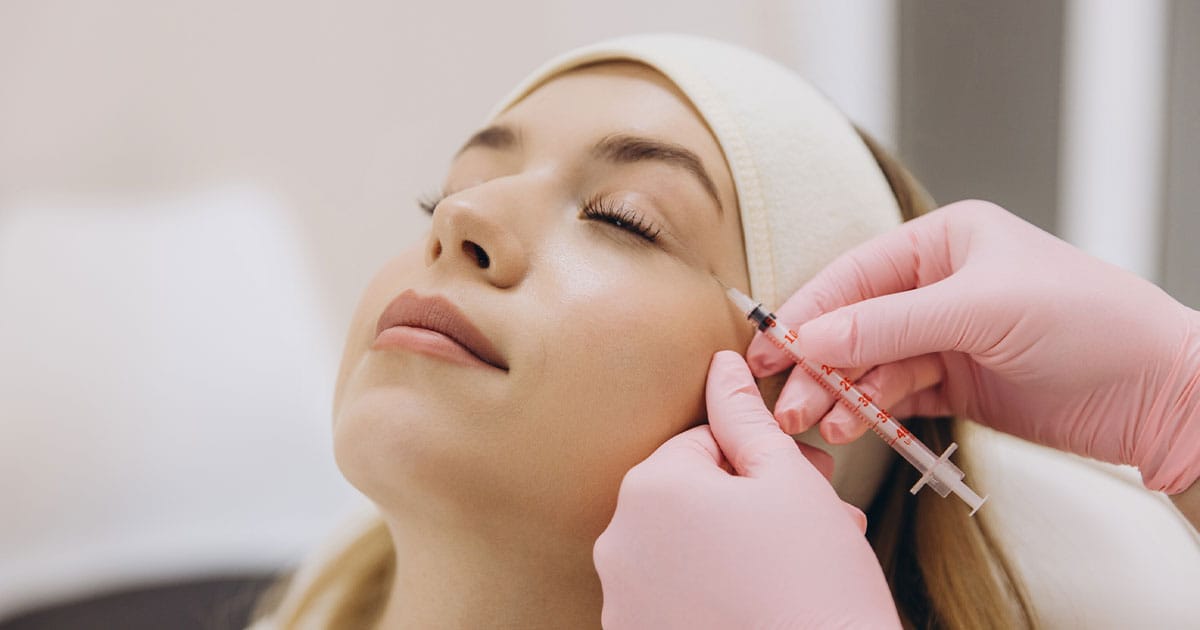
You may have noticed subtle changes in your face that weren’t there a few years ago: fine lines that linger a little longer after you smile, or areas that seem less full than they once were. These are some of the most common reasons people begin exploring injectables.
Two of the most popular injectables that can reverse signs of aging are Botox and dermal fillers. At Invigue Medical Aesthetics in Ashburn, our providers carefully assess your features and help you determine which of these very distinct injectables would better serve your goals.
In this article, we explain the core differences between Botox and dermal fillers.
Overview
Botox
Botox is an injectable neuromodulator that works by relaxing specific facial muscles. These facial muscles are responsible for repeated expressions like frowning, squinting, and raising your eyebrows. Over time, those movements create dynamic wrinkles that appear when your face is in motion and eventually remain visible even at rest. By interrupting the nerve signals to targeted muscles, Botox reduces their ability to contract, allowing the skin to smooth out.
Botox essentially changes how certain muscles behave. This makes it ideal if your primary concern is expression-related wrinkles or if you’re interested in prevention. Many patients use Botox to soften existing lines while also slowing the formation of deeper wrinkles.
Dermal fillers
Dermal fillers are injectable gels, most commonly made with hyaluronic acid, that are placed beneath the skin to restore volume, enhance contours, and smooth deeper folds. As you age, you naturally lose collagen, elastin, and fat in the face, which can lead to hollow areas, sagging skin, and static wrinkles: lines that are visible even when your face is relaxed.
Fillers physically replace lost volume and provide structural support to the skin. They can subtly lift, sculpt, and reshape areas of the face, creating a more youthful appearance. Unlike Botox, which affects muscles, fillers address the volume changes associated with aging.
How they treat wrinkles
Botox
Botox is best suited for dynamic wrinkles caused by muscle movement. Common treatment areas include forehead lines, frown lines between the brows, crow’s feet, and sometimes the corners of the mouth or neck bands. When these muscles relax, the overlying skin appears smoother, and wrinkles become less noticeable. If you notice that your lines are most visible when you make expressions, such as smiling or squinting, Botox may be right for you.
Dermal fillers
Dermal fillers excel at treating static wrinkles and folds that are present even when your face is at rest. Examples include nasolabial folds (smile lines), marionette lines, and creases around the mouth. Fillers lift these areas from beneath the skin, softening their appearance. Because fillers restore lost volume, they also improve skin smoothness and facial structure, which can reduce the appearance of wrinkles beyond just the injection site.
Effect on facial shape and volume
Botox
Botox does not add volume or change facial contours in a filling sense. However, it can subtly influence shape by relaxing specific muscles. For example, treating the masseter muscles in the jaw can create a slimmer lower face, and relaxing certain brow muscles can produce a gentle lift. These changes are indirect and result from altered muscle activity rather than fullness.
Dermal fillers
Fillers directly enhance facial shape by restoring or adding volume. They can define cheekbones, contour the jawline, augment lips, improve chin projection, and correct hollow areas under the eyes or in the temples. If your concerns include looking tired, sunken, or less defined, dermal fillers are often the most effective option.
Treatment experience
Botox
Botox appointments are typically quick. Using a very fine needle, your provider places small amounts of product into targeted muscles. Discomfort is minimal, and the entire process often takes less than 15 minutes. You can usually return to normal activities immediately.
Dermal fillers
Dermal filler treatments may take slightly longer, depending on the areas treated. A topical numbing agent is often applied beforehand to enhance comfort. Your provider carefully injects and shapes the filler to achieve balanced, natural-looking results. Downtime is minimal.
Onset of results and longevity
Botox
You’ll typically begin to see Botox results within 3 to 5 days, with the full effects visible around 2 weeks. The results last about 3 to 4 months, after which muscle activity returns. Regular maintenance treatments can help preserve the results and improve longevity.
Dermal fillers
Many fillers provide immediate improvement, with final results becoming more apparent as swelling subsides. Depending on the product and treatment area, the results can last 6 months to 2 years. Longevity varies based on metabolism, lifestyle, and the type of filler used.
Verdict: Which is right for you?
Botox may be right for you if your main concerns involve expression lines, early signs of aging, or wrinkle prevention. However, fillers may be ideal if you’re noticing volume loss, deeper folds, or changes in contours. They restore fullness and support for a more youthful, balanced look. For many patients, the best solution is a customized combination of Botox and fillers. Together, they address both muscle-related wrinkles and volume-related aging.
At Invigue Medical Aesthetics and Wellness, our providers take the time to understand your goals and design a personalized treatment plan that delivers transformative, natural results. If you’re ready to explore Botox, dermal fillers, or both, we invite you to schedule a consultation in Ashburn and learn how we can help you look and feel your best.